
Whale Watch Tips
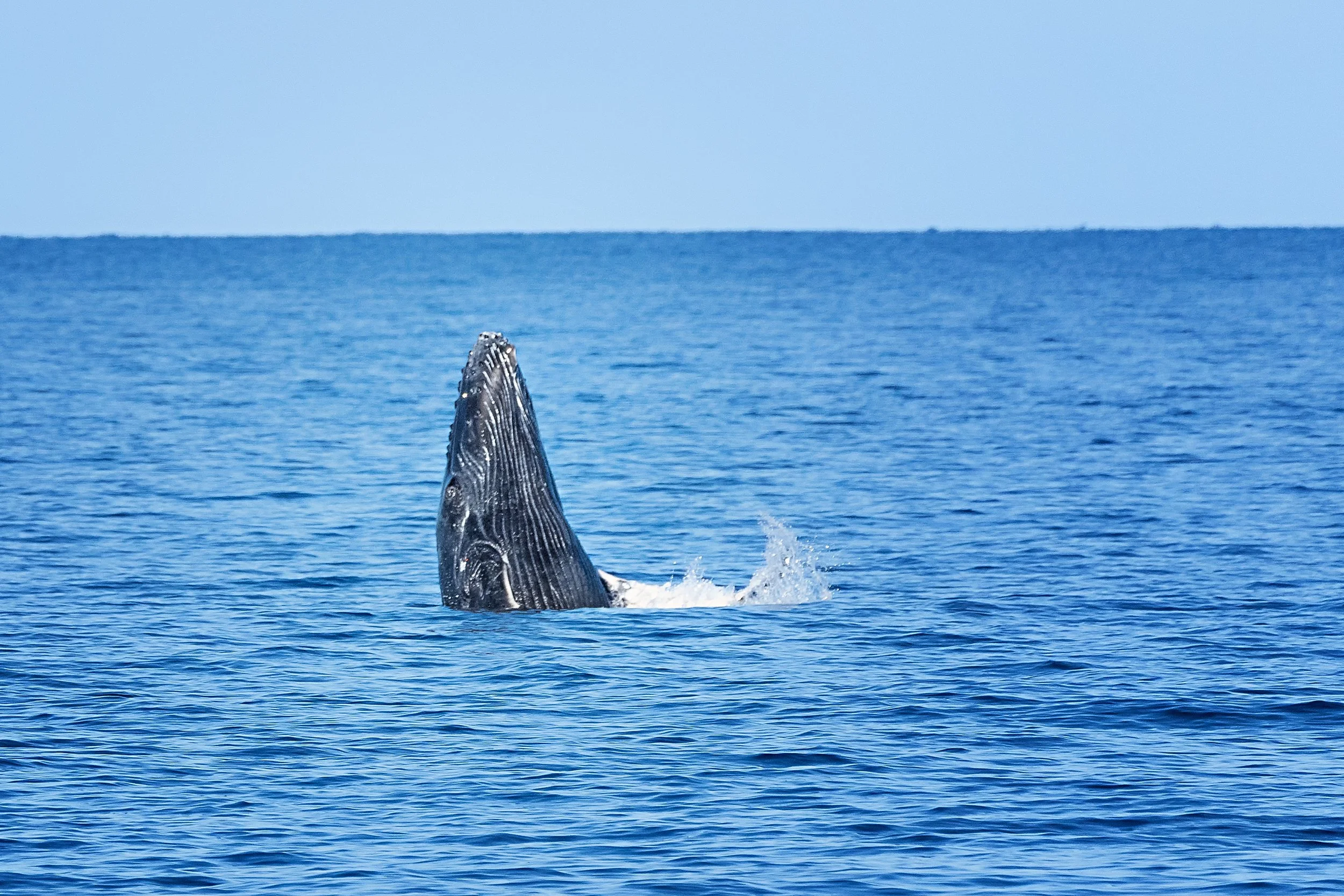
Photo: Humpback Spyhopping
Photographer: David Bernal
Location: Off Kohala Coast of Big Island of Hawaii
As many of you who know me are aware, I am a bit of a whale enthusiast. Since my teenage years, I have been involved in efforts to help protect whales through participation in whale counts and public education about their importance to our oceans. I currently serve on the Board of Directors of the Orange County chapter of the American Cetacean Society and volunteer with marine mammal non-profits on the Big Island of Hawaii. I spend winters in Hawaii observing humpback whales when they return to mate and give birth.
One of my favorite activities is going out on whale-watching boats to photograph whales exhibiting behaviors such as blows, flukes, spy-hopping, tail slaps, and breaching.
While whale watching in Hawaii is incredible, the season typically lasts only 3–4 months and ends around April. Fortunately, in California—particularly Monterey Bay and Orange County—we have year-round whale watching opportunities. These areas are ideal due to deep underwater canyons that create nutrient-rich upwelling conditions, attracting large whales.
Winter: Gray whales are most commonly seen
Summer: Blue whales are the main attraction
Year-round sightings may include: Humpback, fin, sperm whales, orcas, and minke whales
With this in mind, here are some tips for capturing memorable whale photographs in the wild.
Photography Tips
When photographing whales, think of it like shooting a sporting event.
Gear
Mirrorless or DSLR camera
Recommended lens: 100–400mm
Alternative: 70–200mm lens
Camera Settings
Drive mode: Use the fastest continuous shooting mode available
Aperture: f/8 (for greater depth of field due to boat and subject movement)
Shutter speed: Aim for 1/1000 sec or faster to freeze motion
Exposure: Overexpose by at least +1 stop to bring out detail in darker whales
ISO: Adjust as needed to maintain proper exposure with the above settings
Technique
Meter off the surface of the water to establish a baseline exposure
Anticipate movement—both the boat and whales are constantly shifting
Shoot in bursts to increase your chances of capturing the perfect moment
Identifying Whales
The pattern on the underside of a whale’s fluke is similar to a human fingerprint. These patterns can be used to identify individual whales.
If you capture a clear image of a tail fluke, consider submitting it to Happywhale:
https://happywhale.com/home
This platform allows citizen scientists to contribute to marine research. After submitting your image, you may be notified whether the whale is already in the database or newly identified. If it is already cataloged, you can even track where that whale has been previously sighted.
Final Note
If you have any questions, please feel free to reach out. I’m always happy to talk about whales and photography!
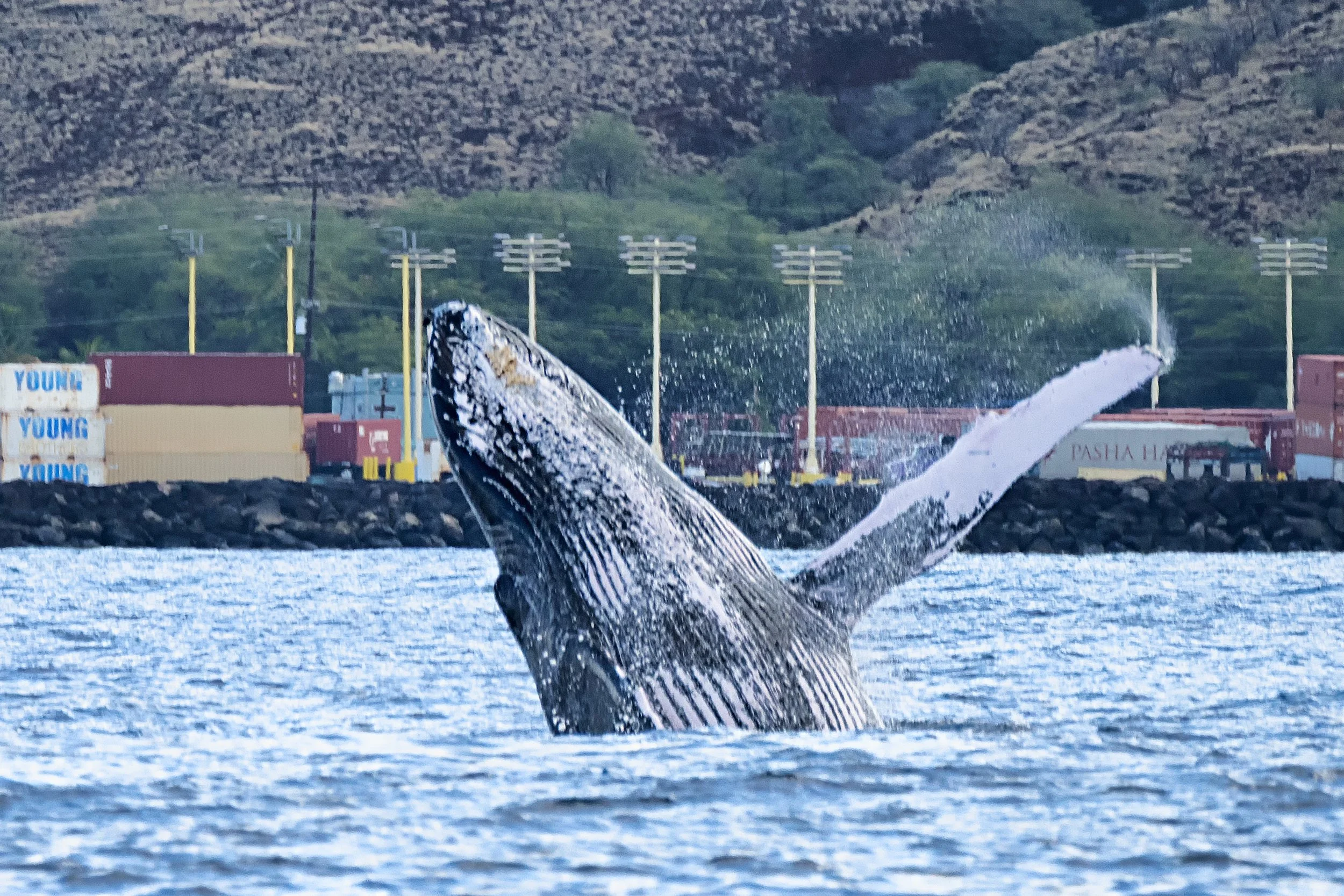
Breaching Humpback
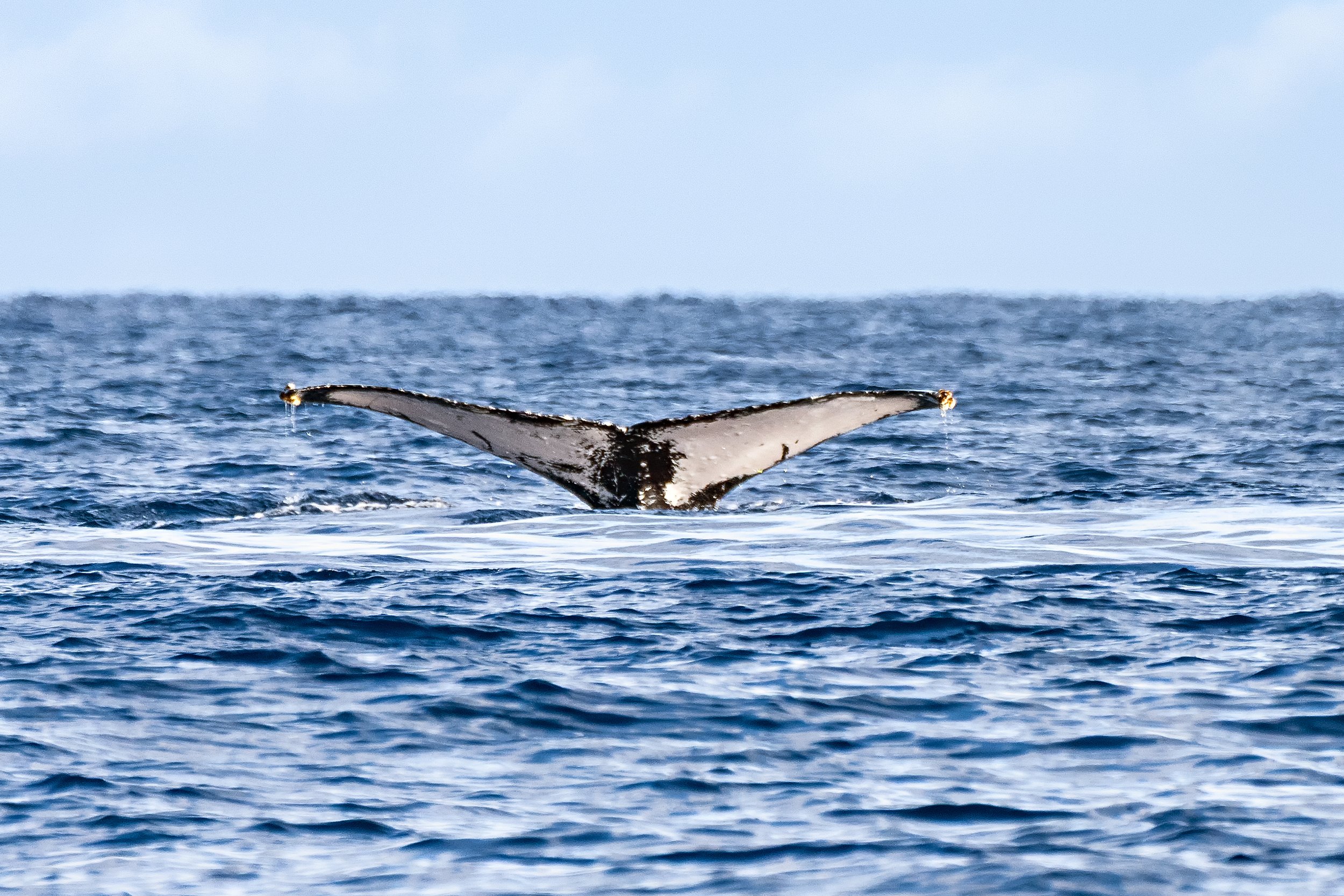
Fluke of Diving Humpback