
The Magic of Burney Falls

Photo: Burney Falls
Exposure: ISO 100, F/11, 1/15sec
Why Go
There’s a moment when you first hear Burney Falls before you see it — a deep, rushing sound that grows louder with every step down the trail. The air turns cooler, the light dims slightly, and then, through the trees, the cascade comes into view — white ribbons of water streaming down a mossy cliff into a turquoise pool.
That first glimpse stopped me in my tracks.
Burney Falls, tucked away in Northern California’s McArthur–Burney Falls Memorial State Park, is unlike any waterfall I’ve photographed. It’s not just one curtain of water but hundreds of smaller streams spilling out from the rock itself, creating a veil of motion that seems to shimmer even when you stand perfectly still.
Planning Your Visit
Location: McArthur–Burney Falls Memorial State Park, near Burney, California
Best time to visit: Spring and early summer are ideal, when the flow is strongest and the surrounding forest glows with fresh green. Autumn adds golden accents, while winter provides moody mist and solitude.
Timing: I initially heard to arrive early — around sunrise if possible. The soft light brings out the waterfall’s texture and minimizes glare on the water. What I witnessed is that around sunrise the light is very good, however if it is a clear day the light will quickly become very harsh and you will lose all detail in the highlights. My latest trip was in September 2025 at around 1pm, there were very high clouds and the sun was behind the falls so the highlights in the falls as well as the deep shadows could be captured in the images shown here
Gear Notes
You can pack light here at Burney Falls.
Lens: I would recommend taking 2 lenses. A 24-70mm for landscapes and tighter compositions. A 70–200mm, if you want to compress the background or isolate details.
Tripod: Essential for long exposures and composition precision.
Filters: A polarizer can reduce glare and enhance leaf color. Consider an ND filter if shooting in bright daylight - it allows for longer shutter speeds without overexposing the image.
Finding the Perfect Angle
The main viewing platform and the path after the stairs, offers a wide, symmetrical view of the entire falls — perfect for a dramatic landscape shot (opening shot).
For more intimate compositions, take the short trail down to the pool’s edge. Along the way, you’ll find side angles that highlight the intricate cascades and the interplay of light and shadow (as seen in your close-up shots).
Camera Settings for Waterfall Photography
Shutter speed: To achieve that silky water effect, experiment between 1/4 to 1 second.
Aperture: f/8 to f/11 for a sharp depth of field.
ISO: Keep it low (100–200) to minimize noise.
Compositional Ideas
Wide shot: Capture the full grandeur — emphasize symmetry and the way the water fans out across the rock face.
Medium shot: Frame a section of the falls with surrounding greenery to show scale and detail.
Close-up: Focus on the smaller cascades and moss-covered textures — they reveal the waterfall’s layered beauty and abstract patterns.
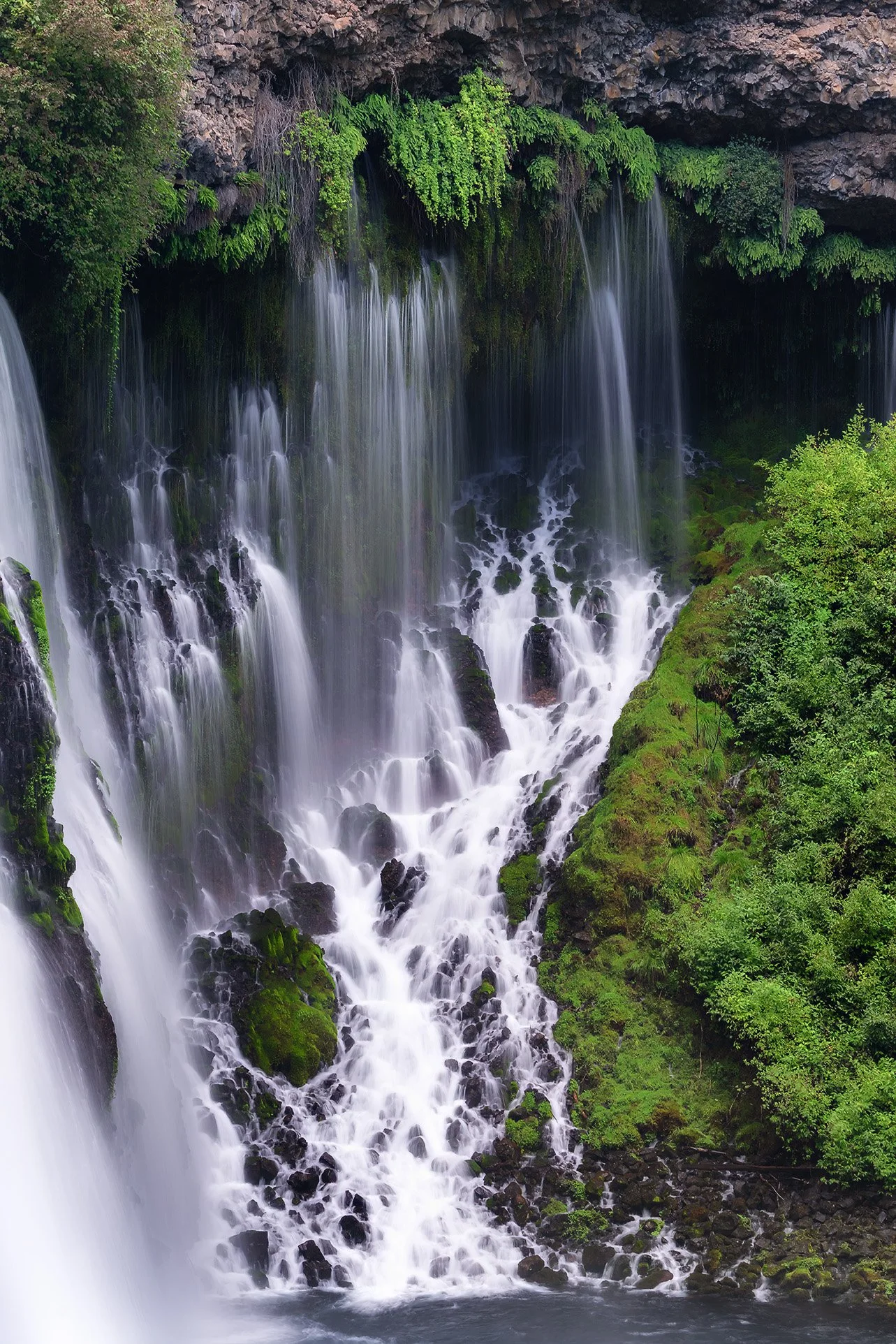
Photo: Side Falls
Exposure: ISO 200, F/11, 1/4sec
Pro Tip
I find the best place to capture the entire falls is on the path after the stairs and before the switchback. Added benefit very little mist.
Dealing with Mist and Moisture
Burney Falls generates a lot of spray — part of its magic but also a challenge for photographers.
Bring a microfiber cloth to wipe your lens regularly, and use a lens hood to shield from droplets. A waterproof cover for your camera or bag is also handy.
Final Word
Photographing Burney Falls reminded me why I love nature photography in the first place. It’s not just about the perfect exposure or the sharpest shot — it’s about slowing down, observing, and connecting with a place through your lens.
If you ever find yourself in Northern California, make the detour. Bring your camera, but more importantly, bring your curiosity. Let the sound guide you, feel the mist on your skin, and capture the falls not just with your camera, but with your memory.
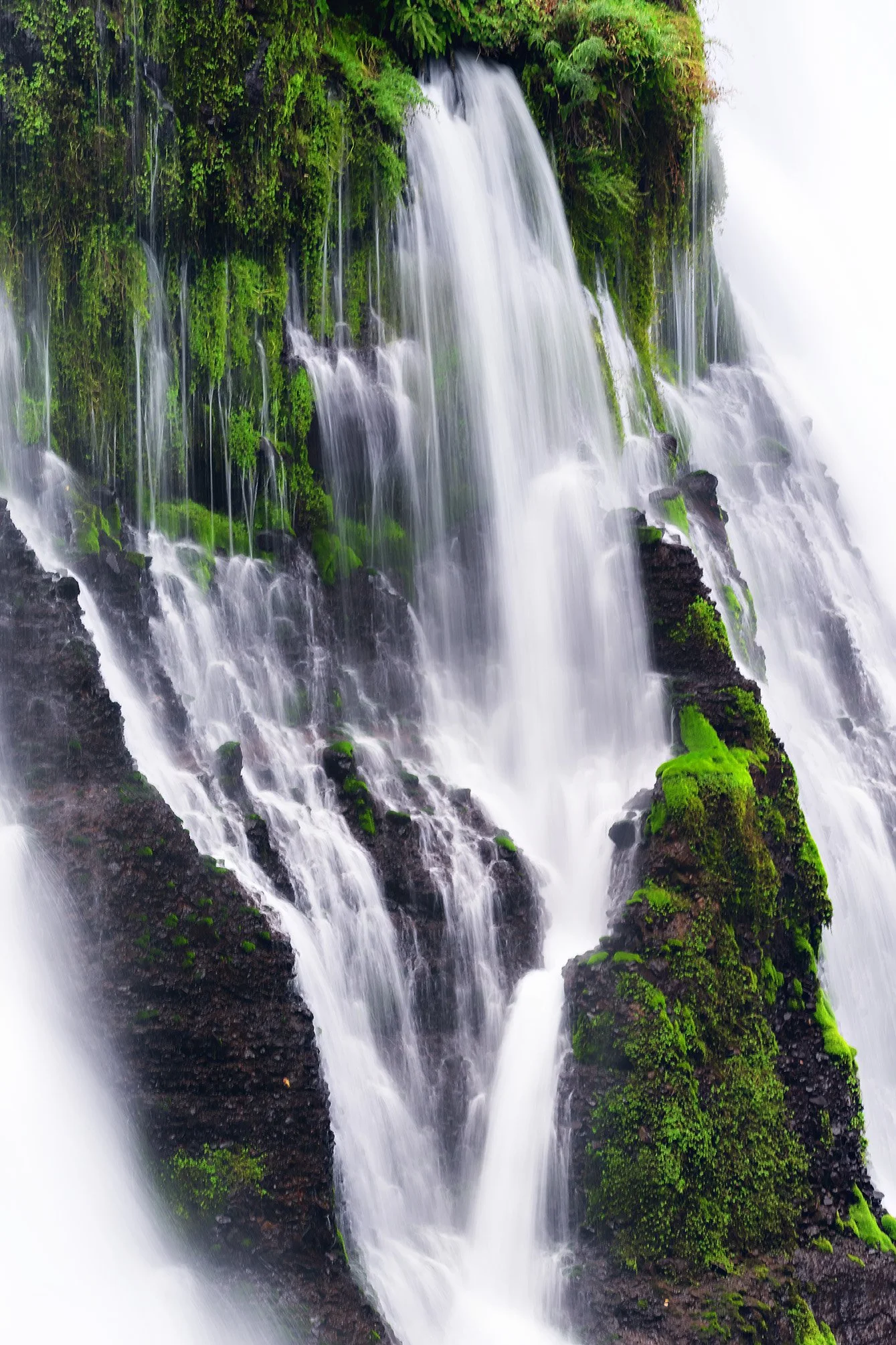
Photo: Middle Falls
Exposure: ISO200, F/8, 1/5sec